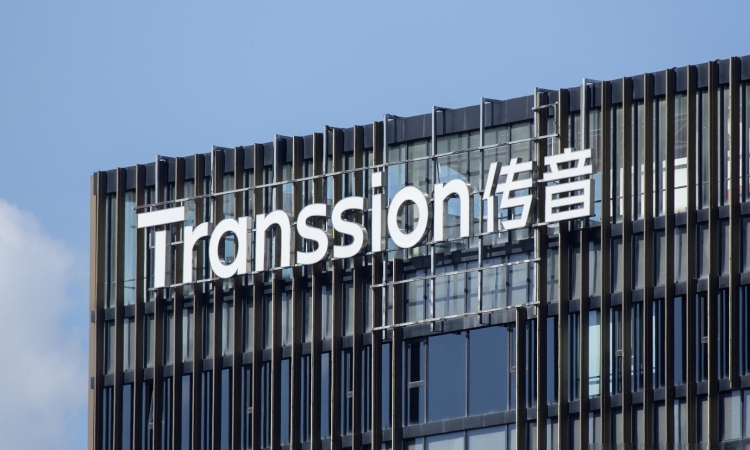
On April 1, 2026, the Third Commercial Court of Rio de Janeiro, Brazil, issued a ruling in the 5G standard-essential patent infringement dispute between InterDigital and Transsion: Transsion was found to have infringed two of InterDigital’s 5G standard-essential patents (patent numbers: BRPI0305519, BRPI0318825). The court also ruled that the patent licensing offer made by InterDigital to Transsion complied with the FRAND principles and, accordingly, granted InterDigital a preliminary injunction against Transsion, explicitly prohibiting Transsion from selling the relevant devices in the Brazilian market.

It is reported that the reasoning behind this ruling primarily revolved around the nature of standard-essential patents and the fulfillment of FRAND obligations. The court adopted the opinion of an independent technical expert, determining that the patents in question are technically indispensable, meaning that no device compliant with 5G standards can implement the relevant functions without infringing these patents. On this basis, the court further confirmed that Transsion’s products implemented the relevant technical solutions without obtaining a patent license, thereby establishing the fact of infringement. At the same time, after a comprehensive review of InterDigital’s licensing offer, the court rejected Transsion’s potential defenses, such as “unreasonable licensing terms” and “ “abuse of rights by the patent holder.”

Unlike the preliminary injunction previously issued in Brazil, the injunction against Transsion in this case constitutes a typical substantive preliminary injunction. After nearly six months of comprehensive proceedings, the court completed a thorough review of patent essentiality, the facts of infringement, and the application of FRAND terms, significantly increasing the difficulty for Transsion to seek a stay of the injunction.

This Brazilian litigation is merely one part of InterDigital’s global patent enforcement campaign against Transsion; InterDigital has simultaneously filed lawsuits against Transsion in multiple jurisdictions worldwide. It is understood that these lawsuits were filed successively in September 2025 at the Munich Regional Division of the Unified Patent Court in Europe, between September and October 2025 at the Delhi High Court in India, and in September 2025 at the Commercial Court of Rio de Janeiro in Brazil. In these lawsuits, InterDigital is seeking injunctive relief and requesting that the courts designate Transsion as a “non-cooperative licensee.”

The case is currently still in the preliminary injunction phase, and the outcome of the subsequent substantive proceedings remains to be determined.