In September 2026, two subsidiaries of the German chemical company BASF filed a patent infringement lawsuit in the U.S. District Court for the Western District of Texas, alleging that Apple used their facial recognition technology in the Face ID system of multiple iPhone and iPad models, thereby infringing on seven U.S. patents. The plaintiffs sought damages from Apple and requested that the court issue an injunction against the alleged infringing activities. At the same time, the plaintiffs filed a petition with the U.S. International Trade Commission (ITC). On October 6, the ITC formally decided to initiate a Section 337 investigation.

The two plaintiffs in this case are the German subsidiary trinamiX GmbH and the U.S. subsidiary trinamiX Sensing LLC, both of which are part of the BASF Group. The plaintiffs allege that Apple incorporated trinamiX’s patented technology into multiple iPhone and iPad models and used the technology for facial recognition without a license.
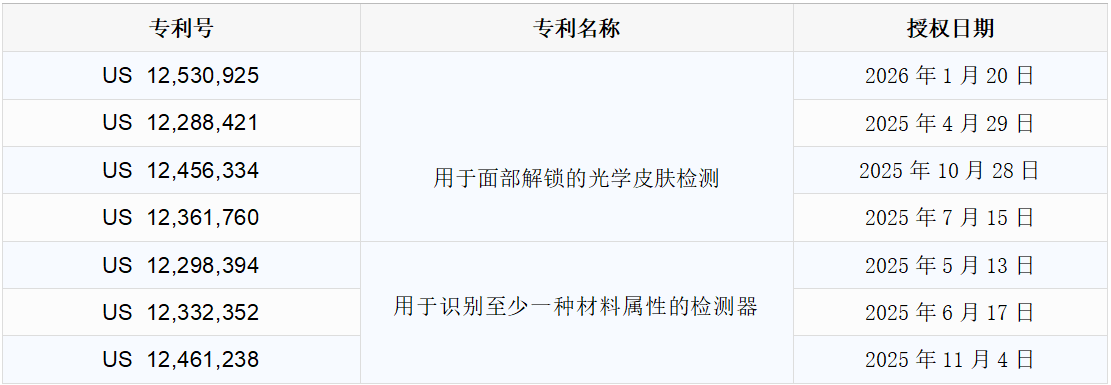
According to the complaint, the seven U.S. patents at issue are divided into two groups. The first group of patents relates to the optical detection of real human skin to assist in facial recognition, while the second group relates to the detection of an object’s material properties. Both sets of technologies relate to the anti-spoofing capabilities of facial recognition systems, designed to help the system distinguish between real human faces and fake faces created using photographs, 3D-printed masks, or silicone replicas.
The plaintiff alleges that Apple has used the relevant patented technology in the iPhone 15, iPhone 16, and iPhone 17 series, as well as in certain iPad Pro models. The complaint states that while Apple had not yet adopted the technology claimed by the plaintiff when it launched the iPhone X and its Face ID feature in 2017, subsequent products’ facial authentication systems have incorporated the relevant skin detection and material identification capabilities. The plaintiff further alleges that Apple knew or should have known that the technology used in the relevant products might infringe its patent rights, and has accordingly sought damages and an injunction for infringement. It should be noted that the above content consists solely of the plaintiff’s legal claims and does not constitute a determination that Apple has committed patent infringement.
In addition to the federal court lawsuit, trinamiX has filed a Section 337 complaint with the U.S. International Trade Commission (ITC), requesting an investigation into whether certain mobile electronic devices and their components infringe its patents, and seeking remedies such as a limited exclusion order and an injunction.
The ITC received the petition in September 2026 and formally initiated the investigation on October 6, under case number 337-TA-1525. According to information released by the ITC, the investigation involves six U.S. patents: US 12,530,925, US 12,288,421, US 12,456,334, US 12,361,760, US 12,298,394, and US 12,332,352. Compared to the seven patents asserted in the federal court litigation, the patents listed in this ITC investigation exclude US 12,461,238. Unlike federal court litigation, which primarily involves claims for damages and injunctions, an ITC investigation may result in trade remedy measures against imported products. If a violation of Section 337 of the U.S. Tariff Act of 1930 is ultimately determined, the ITC may issue a limited exclusion order restricting the entry of the relevant products into the U.S. market and may issue an order prohibiting related commercial activities within the United States.